
MSL to help power new national precision timing service
Collaboration between MSL and Chorus helps to launch TimeSync, which will disseminate our national time signal via NZ's fibre network
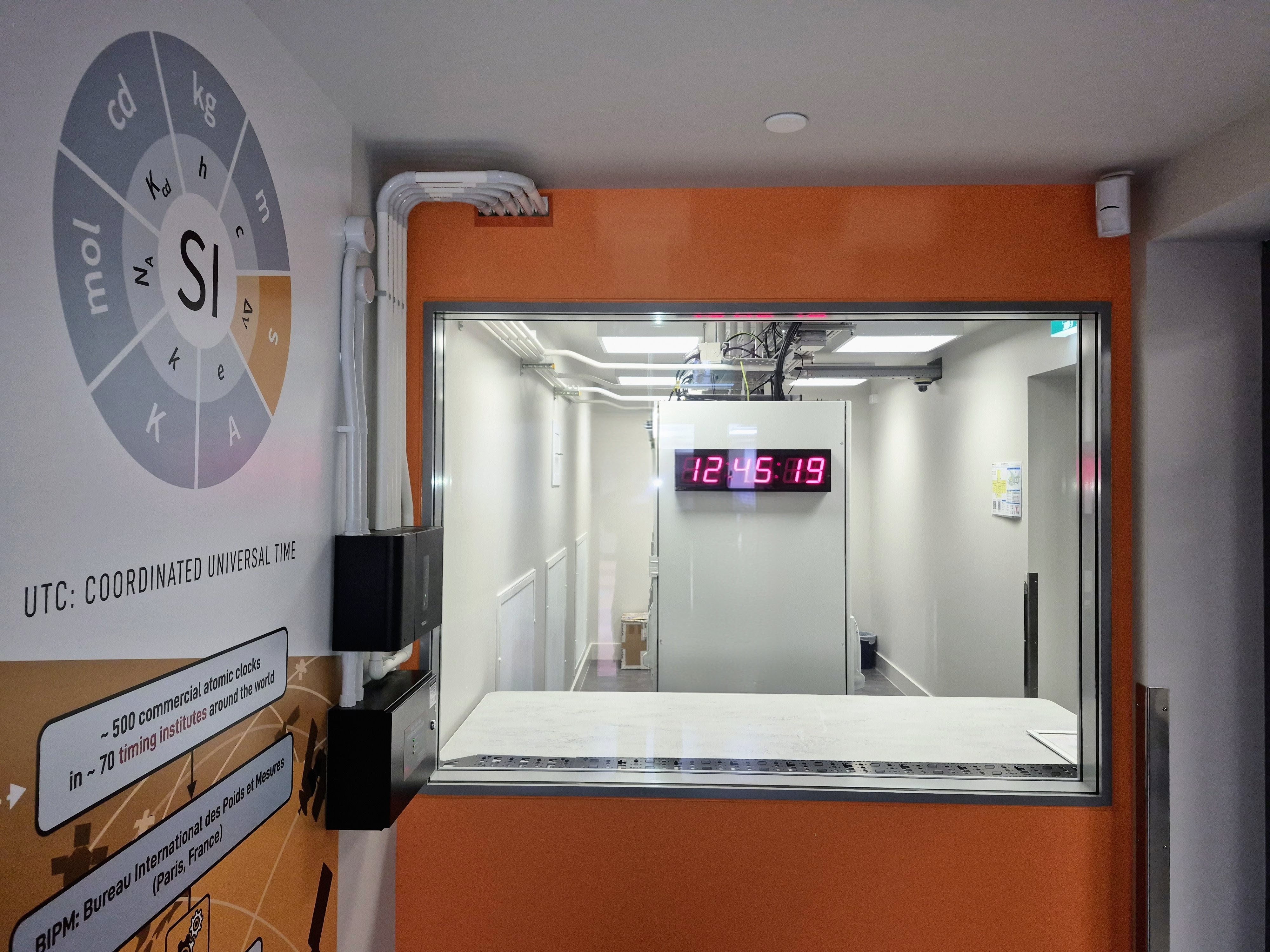
The Measurement Standards Laboratory (MSL) – the home of time in New Zealand – is working with Chorus to distribute precise time across the country's optical fibre network, supporting a new commercial service called TimeSync.
Chorus' fibre network will link to UTC(MSL), Coordinated Universal Time (UTC) derived from MSL's atomic clocks, which use a precisely-specified atomic frequency to set the length of the second. As the most stable clocks ever built, they allow accurate time to be maintained and shared throughout the country.
"Precise timing is the invisible heartbeat keeping our modern networks synchronised, trusted and running," says Dr Peter McDowall, MSL Director and Chief Metrologist. "We're pleased to be working with Chorus on new ways of delivering accurate and trustworthy time over fibre networks, strengthening New Zealand's timing capability and resilience."
Many of the services that support critical infrastructure in New Zealand rely on timing from global navigation satellite systems (GNSS) operated by other countries; the most well-known of these is the US-operated Global Positioning System (GPS). But all satellite systems are vulnerable to both human interference (e.g. jamming and spoofing[1]) and natural effects (e.g. space weather[2]). NZ’s reliance on GNSS for timing makes our economy and security vulnerable to any disruption in their operation. Countries around the world are becoming increasingly aware of the risks involved, and are investing in various mitigation strategies, including terrestrial dissemination of national time standards.
“Having a terrestrial, nationally distributed source of precise timing built and operated right here in New Zealand helps strengthen our national security and resilience, while providing greater diversity and redundancy in our timing infrastructure,” says Chorus’ Chief Technology Officer Martin Sharrock. The first phase of the TimeSync rollout will link atomic clocks into Chorus' network infrastructure. The service is expected to be introduced progressively from early 2027, starting with Wellington, Auckland and Christchurch.
This milestone reflects years of dedicated collaboration between MSL and Chorus, built on a multi-year pilot project and field trial, which focused on the dissemination of our national time signal by fibre.
For more on MSL’s work on using optical fibres to send timing signals, read our Case Study(external link).
[1] Federal Aviation Administration GNSS Interference Resource Guide 2026: https://share.google/dNJ8BVnHW8xXuKfzc(external link)
[2] German Aerospace Centre: https://gnss-monitoring.dlr.de/ionospheric-conditions(external link)